

Key Takeaways
- Candidate sourcing is the proactive search for qualified people before they apply, not the full hiring process.
- Nearly half of talent leaders (46%) say their current sourcing tools are ineffective, pointing to a gap between tech adoption and real results.
- Only 25% of talent acquisition leaders rate their technology as very effective for high-volume hiring, showing most tools still underdeliver.
- AI sourcing tools can speed up list-building, but candidate engagement still depends on human follow-up and judgment.
What Is Candidate Sourcing?
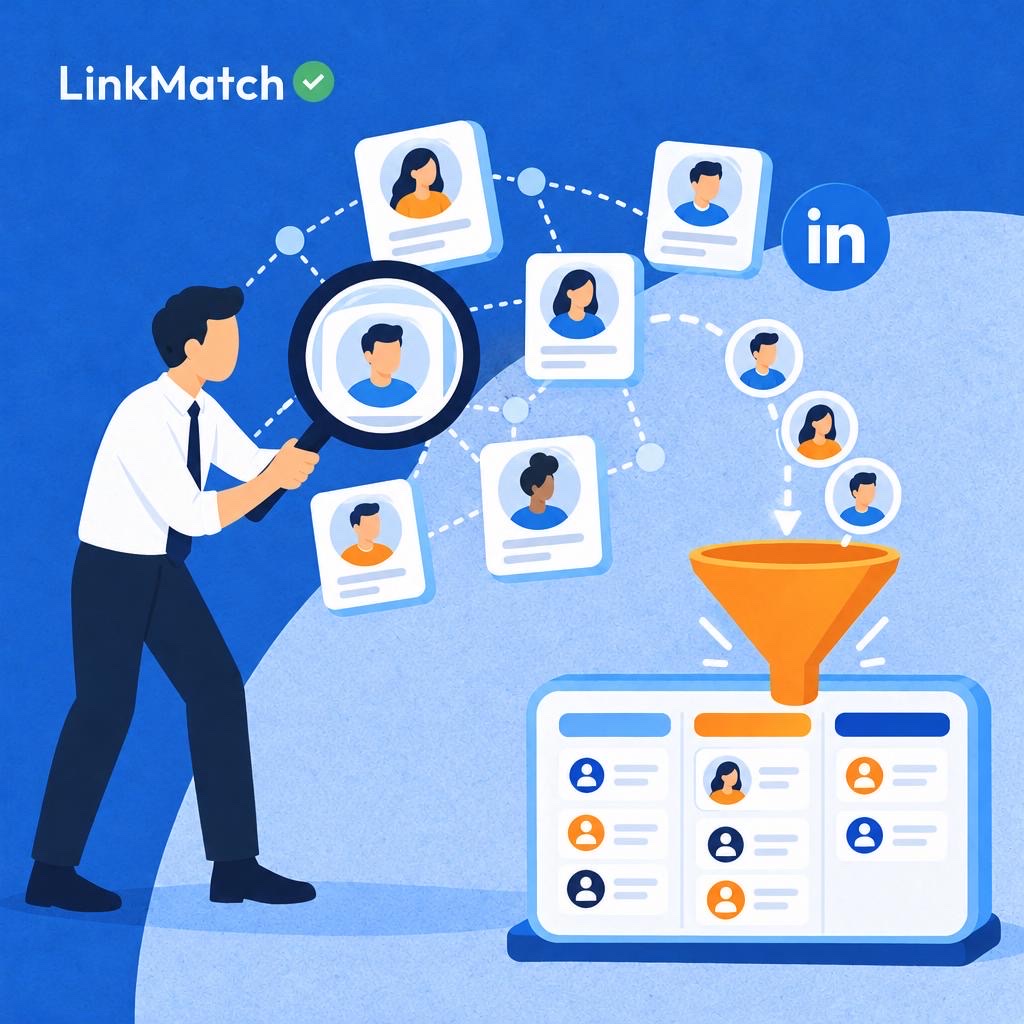
Sourcing means finding people, not screening applicants. It is the proactive search for potential candidates who are not actively browsing job boards, often through professional networks, databases, referrals and direct outreach. Recruiters identify prospects based on skills, experience and potential fit before any application exists. The goal is building a pipeline of talent that can be approached when a relevant role opens, rather than reacting to whoever applies.
This differs sharply from screening, which happens after someone has already applied.
Screening filters inbound resumes against job requirements, while sourcing creates the pool those resumes come from in the first place.
Sourcing also precedes interviewing by a wide margin. Interviews assess candidates who have cleared initial filters and expressed interest in a specific role. Sourcing, by contrast, often involves reaching people with no awareness of the opening at all, requiring persuasion and relationship-building rather than evaluation.
Good sourcing work is research-heavy and ongoing. It relies on understanding where target talent spends time, what motivates a career move, and how to craft outreach that gets a reply instead of silence.
Candidate Sourcing vs. Recruiting: The Key Difference
Sourcing is one stage inside the recruiting lifecycle. It covers the search for passive talent who have not applied anywhere, built through outreach, research, and relationship building long before a job posting exists. Recruiting is the broader process that carries a candidate from first contact through screening, interviews, offer, and signed acceptance.
Confusing the two leads teams to measure the wrong outcomes, judging sourcing by hires made rather than pipeline built. Sourcing success looks like a healthy list of qualified, engaged prospects ready to talk. Recruiting success looks like a filled seat on a specific timeline.
| Aspect | Sourcing | Recruiting |
|---|---|---|
| Focus | Finding passive candidates | End-to-end hiring process |
| Timing | Before application | From posting to offer |
| Goal | Build pipeline | Fill the role |
Why Active Sourcing Matters More Than Ever
Most hires still come from passive channels today. Candidates who are not actively job hunting fill the majority of open roles, yet many talent leaders say active sourcing is vital to building a strong pipeline (onrec.com). That gap between belief and behavior is the core tension in modern hiring.
Relying only on applicants who come through job boards means missing the people who are already succeeding elsewhere.
Active sourcing closes that gap by putting recruiters in direct contact with people who never would have applied on their own. It also shortens time-to-hire when paired with automation, since Greenhouse reported a 70% reduction in sourcing time using similar AI automation (Greenhouse).
Waiting for applications to arrive leaves the strongest candidates on the table.
Building outbound habits now is what separates teams that compete for talent from teams that simply wait for it.
The Candidate Sourcing Process, Step by Step
A repeatable sourcing workflow beats one-off searches. Recruiters who follow a structured sequence fill roles faster because every step narrows the candidate pool with purpose instead of guesswork. Random searching wastes hours chasing profiles that never fit the role.
A defined process turns sourcing into a system that scales across multiple open requisitions at once. It also makes handoffs between recruiters and hiring managers smoother, since everyone works from the same criteria and stage definitions.
- Define the role criteria and ideal candidate profile before opening any search tool.
- Identify the right sourcing channels, whether that's LinkedIn, internal databases, or employee referrals.
- Search broadly first to build a longlist, then narrow it down.
- Qualification: score and prioritize candidates against must-have skills and experience.
- Send personalized outreach that references something specific about each candidate's background.
- Pipeline tracking: log responses and move engaged candidates into active stages. See how to add LinkedIn candidates to your ATS.
- Revisit the profile and channels if response rates stall, rather than sending more generic messages.
Where Recruiters Find Candidates
Channel choice shapes who you actually reach. A recruiter searching only one professional network sees a narrow slice of the market, while someone pulling from internal databases, referral networks, and niche communities builds a far wider and more qualified pool. Each channel type carries its own bias: networks skew toward people who maintain visible profiles, while industry events surface passive candidates who rarely apply cold. Mixing channels is less about volume and more about matching the source to the role's seniority, rarity, and urgency. For LinkedIn's paid search product, see what LinkedIn Recruiter is and how it works.
- Professional networks like LinkedIn and XING remain the default starting point for active and semi-active candidates.
- Internal ATS databases hold past applicants who already expressed interest and may fit a new opening.
- Talent databases and people-search platforms expand reach beyond anyone currently job-hunting.
- Employee referrals and alumni networks tend to produce candidates who already understand the company culture.
- Niche communities and industry events put recruiters in front of specialists who rarely show up in generic searches.
- Sourcing across several of these channels at once raises the risk of contacting someone already in a pipeline; in practice, tools like LinkMatch flag an existing CRM or ATS match instantly on a LinkedIn or XING profile, preventing duplicate outreach.
How AI Is Changing Candidate Sourcing
AI expands reach but doesn't replace human judgment. Modern sourcing tools scan millions of profiles in seconds, surfacing candidates recruiters would never find through manual searches or job board scrolling. Metaview reported 93.5% sourcing precision on Exa's 1,400-query People Search Benchmark, showing that matching accuracy has reached a point where machine-ranked results closely track what a skilled recruiter would choose (Metaview benchmark). That kind of precision matters because scale without accuracy just creates more noise to sort through.
Scale itself has also grown sharply. Juicebox.ai now indexes over 800 million global profiles, giving recruiters a pool wide enough to find niche skill sets across industries and regions (Juicebox.ai).
Bigger databases don't automatically mean better hires. Precision scoring and database size solve different problems: one finds relevant people, the other finds enough of them. Recruiters still need to judge fit, culture, and intent before extending outreach, tasks no algorithm fully owns yet. For a deeper look, see what AI candidate sourcing actually does.
Why Many Sourcing Tools Still Fall Short
Nearly half of sourcing teams doubt their current tools. 46% of sourcing teams said their current sourcing tool was somewhat or not at all effective (TestGorilla, 2025). A separate survey found the same share, 46% of talent leaders, described their sourcing tools as ineffective (Onrec, 2025). Two independent surveys landing on identical figures points to a genuine, widespread gap rather than a one-off complaint.
That gap doesn't mean every tool is broken beyond use.
It means close to half of teams are working with systems that fail to match how recruiters actually search, filter and engage candidates today.
Automation and AI features get marketed as the fix, yet adoption alone hasn't closed the trust deficit. Teams report frustration not with the idea of sourcing software but with execution: clunky workflows, poor match quality, and limited visibility into candidate data. Until tools address those specific complaints, skepticism will likely persist at scale. Our comparison of candidate sourcing tools that fix pipeline problems breaks down those trade-offs.
Measuring Sourcing Effectiveness
Track response rate and time-to-pipeline, not just volume. A high number of sourced candidates means little if few reply or convert into qualified pipeline within a reasonable window. Only 25% of talent acquisition leaders rate their technology as very effective for high-volume hiring, according to a report quoted on (fountain.com) citing Aptitude Research. That gap suggests most teams are measuring the wrong things or lack visibility into what happens after outreach.
Effective sourcing shows up in three places: reply rates, speed from first contact to interview, and quality of candidates who actually advance.
Volume-focused dashboards hide stalled pipelines and wasted recruiter hours.
Teams should review these numbers monthly, not quarterly, since hiring needs shift fast in high-volume roles. Comparing response rates across channels also reveals which sourcing methods are worth scaling versus cutting. Without that discipline, the 25% effectiveness figure is unlikely to improve industry-wide.
Common Candidate Sourcing Mistakes to Avoid
- Treating sourcing as a one-time search: Sourcing works best as a continuous pipeline-building habit, not a single burst of searching when a role opens.
- Sending generic, unedited AI-drafted messages: AI-generated outreach often needs heavy editing to sound human; sending it as-is tends to hurt response rates.
- Ignoring your own ATS before searching externally: Many teams search new databases without first checking existing records, missing previously sourced or applied candidates.
- Judging tools by features instead of outcomes: A long feature list doesn't guarantee effectiveness, nearly half of teams report their current tools underperform despite adoption.
FAQs about What Is Candidate Sourcing
Is candidate sourcing the same as recruiting?
No. Sourcing is one stage within recruiting, focused specifically on identifying and engaging potential candidates. Recruiting is the full lifecycle, which includes sourcing plus screening, interviewing, offer negotiation, and onboarding.
What AI tools do people actually use for sourcing candidates?
Common tools include database search platforms that scan resumes and professional profiles, along with enrichment tools that fill in missing contact details or background information. These tools help surface candidates faster, but outreach and relationship-building still require human involvement.
Does AI sourcing actually improve response rates?
Results are mixed. Reports show nearly half of users consider these tools ineffective, so there's no guaranteed lift in response rates. Outcomes vary depending on how the tools are used alongside human outreach.
Who typically does candidate sourcing?
Sourcing is usually handled by recruiters, dedicated sourcers, and talent acquisition specialists. In some organizations, sales-adjacent business development roles also take on sourcing responsibilities, particularly when identifying and reaching out to passive candidates.
Sources
Tired of endless tab-switching while sourcing on LinkedIn?
Stop wasting hours copying and pasting candidate data. Sync LinkedIn profiles directly to your ATS with a single click and move candidates faster.
Try the Chrome Extension